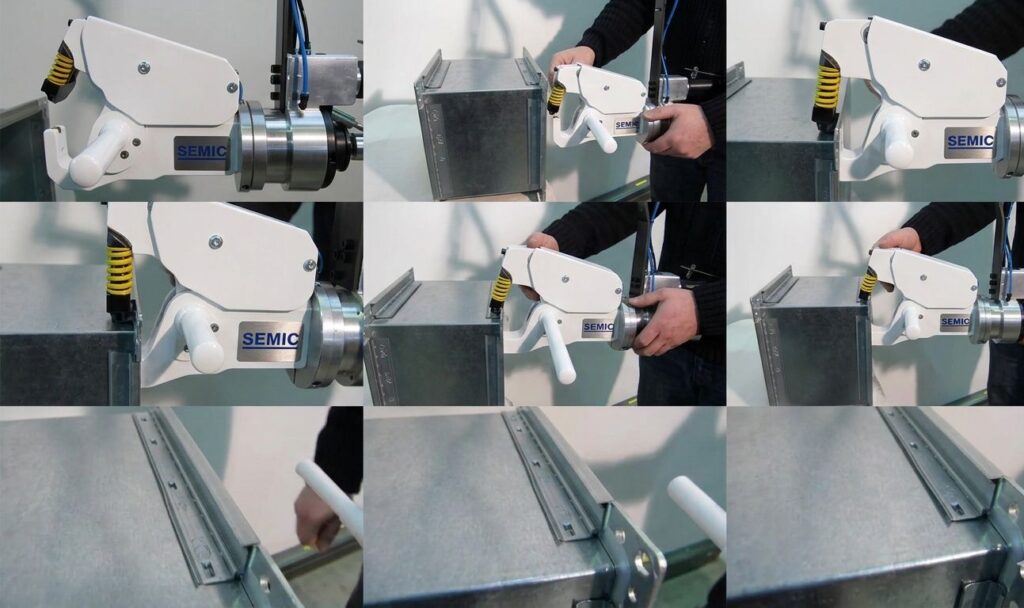
Semic: Manufacturer, Supplier, and Exporter of Clinching Machines
At Semic, we specialize in manufacturing, supplying, and exporting advanced clinching machines designed to deliver fast, reliable, and cost-effective metal joining solutions. Clinching technology joins sheet metals without the need for additional fasteners such as rivets, screws, or welding.
This method offers a clean and efficient way to create a strong, permanent bond while eliminating sparks, fumes, and extra joining materials. Compared to traditional methods like spot welding, our clinching machines operate quietly, consume less power, and require minimal maintenance. As a result, they provide an efficient and environmentally friendly joining solution suitable for a wide range of industries.
What is a Clinching Machine?
A Clinching Machine is a mechanical system used to permanently join two or more metal sheets without the need for additional fasteners such as rivets or screws. The process uses a punch and die to press the sheets together, forming a strong interlocking joint in a single stroke. This method creates a durable, leak-proof, and fatigue-resistant connection.
Clinching can be used with a wide range of materials, including plain metals, pre-coated and pre-painted sheets, as well as dissimilar metals. Because of its flexibility and efficiency, it is widely used across many industrial applications.
Key Benefits of Clinching Machines from Orbital System (Bombay) Pvt. Ltd.:
- No Additional Fasteners Required: The clinching process removes the need for screws, rivets, or welding, making it a cost-effective and material-saving joining method.
- Clean and Safe Process: Clinching produces no sparks, fumes, or soot and operates with low noise, making it suitable for environmentally sensitive workplaces.
- Strong and Durable Joints: The resulting joints are highly durable, leak-proof, and resistant to fatigue, ensuring reliable long-term performance.
- Extended Tool Life: A single tool can produce up to 300,000 joints, minimizing maintenance and reducing downtime.
- Compatible with Dissimilar Metals: Clinching can effectively join different materials such as steel, stainless steel, bronze, copper, and aluminum.
- Energy Efficient: With low power consumption, clinching is an environmentally friendly and economical alternative to traditional spot welding.
Types of Clinching Machines
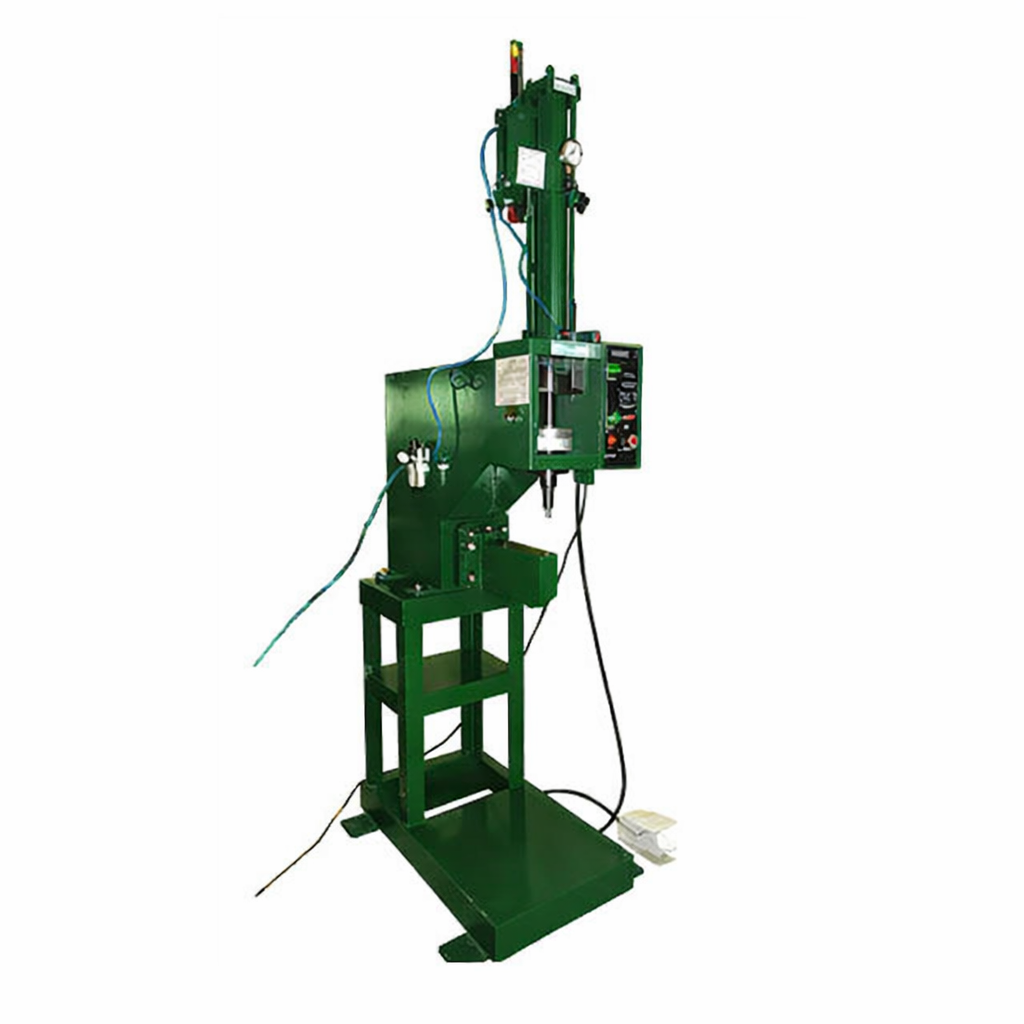
- Pneumatic Clinching Machines
- Function: Powered by compressed air, pneumatic clinching machines are used for medium-volume production and provide faster and more efficient joining than manual systems.
- Applications: Widely used in sheet metal industries, including automotive and appliance manufacturing, for creating durable joints.
- Advantages: Faster than manual machines and provides more consistent results, ideal for medium-scale production environments.
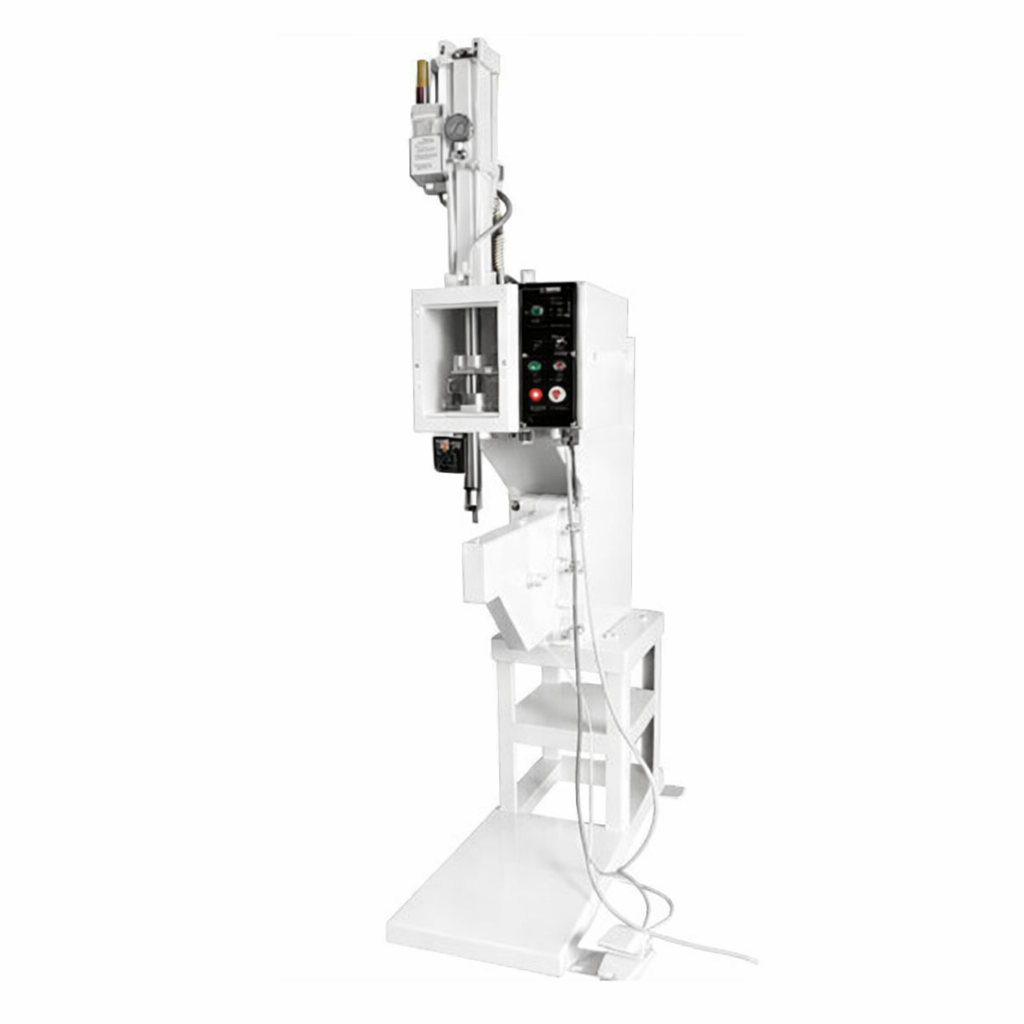
- Hydraulic Clinching Machines
- Function: Hydraulic clinching machines are used for high-volume production where greater force and precision are required to join thicker or more resistant metals.
- Applications: Used in automotive, construction, and industrial equipment manufacturing for creating strong joints in heavier materials.
- Advantages: High precision and force allow for strong, permanent joints in high-volume production, suitable for industrial-scale operations.
Applications of Clinching Machines
Clinching Machines are widely used across various industries for assembling components with precision, durability, and cost-efficiency. Below are industry-specific applications of clinching technology:
Automotive Industry
Use: The automotive industry relies on clinching machines for assembling vehicle components such as panels, frames, and body parts. The process ensures strong and durable joints that can withstand the stress and fatigue that comes with automotive operations.
Panel and Frame Assembly: Clinches various panels, frames, and structural parts of automobiles, providing long-lasting and durable joints.
Control Panels and Terminal Connections: Used to secure electrical panels and connections in automotive systems with precision and durability.
Products: 4 Ton & 8 Ton Stand-Alone Clinching Machines.
Home Appliance Industry
Use: Clinching machines are used extensively in the home appliance sector, where precision and durability are key. Appliances such as washing machines, refrigerators, microwave ovens, and air conditioners benefit from the clean, reliable, and strong joints created by the clinching process.
Assembly of White Goods: Ensures strong, leak-proof joints in the assembly of washing machines, refrigerators, air conditioners, and microwave ovens.
Component Fastening: Used for securing various internal components in white goods, ensuring durability and smooth operation over time.
Products: Portable Clinching Machines for lightweight tasks.
HVAC and Ducting Industry
Use: The HVAC industry benefits greatly from the clinching process, especially in assembling ducts, vents, and air conditioning systems. The leak-proof nature of clinched joints ensures that HVAC systems remain efficient and durable, with no leakage at connection points.
Duct and Vent Assembly: Clinching creates leak-proof joints for ducting systems, ensuring efficiency and preventing air loss.
Air Conditioning Units: Joins various metal sheets in air conditioning units, providing a strong and durable bond that withstands environmental conditions.
Products: 4 Ton Stand-Alone and Portable Clinching Machines.
Elevator and Structural Components
Use: In the elevator manufacturing industry, clinching machines are used to fasten elevator walls, panels, and frames. The high strength and durability of clinched joints make them ideal for the structural requirements of elevator components.
Elevator Panel and Wall Fastening: Clinching provides strong and reliable joints for the assembly of elevator walls and frames, ensuring durability and safety.
Structural Components: Used in the assembly of various structural parts, providing reliable joints that withstand high stress and strain.
Products: 8 Ton Stand-Alone Clinching Machines for heavy-duty applications.